

Have you been searching how to play parachute panic Java game? If you are nodding your head right now, I will not only teach you how to play it but also give you some tactics I used while playing this game.
My first few rounds ended in under a minute because I treated this game like a calm puzzle. It is not. It is controlled chaos, and that is exactly why it hooks you. This guide will take you from a nervous beginner who loses five jumpers in thirty seconds to someone who sees the pattern in the panic. I will walk you through the menu, teach you the exact buttons to press, show you how each threat works, and share the mistakes I made so you do not have to repeat them. Let us get started.
Quick Look: Parachute Panic Game Table
Here is everything you need to know before you load the game.
| Detail | Info |
|---|---|
| Developer | FDG Entertainment |
| Release Year | 2009 |
| Genre | Action / Casual Arcade |
| Platform | Java Mobile Phones |
| Main Controls | Numeric Keypad (2, 4, 5, 6, 8) |
| Game Modes | Single Player Survival |
| Session Length | 2 to 5 minutes per round |
| Art Style | Hand drawn notebook and crayon look |
| Goal | Guide skydivers onto moving boats while avoiding obstacles |
Gameplay
Where It All Started: History and Background
Parachute Panic was developed by FDG Entertainment, a studio based in Germany that knew how to make simple ideas feel massive.
The game launched in 2009 and quickly became one of those titles you saw on every other phone in school. It was not trying to be a console game. It was built for short bus rides, waiting in line, or killing time during lunch. The charm came from its art style.
Everything looks like it was drawn in a school notebook with crayons and a ballpoint pen. The paper background, the scribbled clouds, and the wobbly animations give it a personality that most mobile games back then simply did not have. FDG later brought the game to iOS and Android, but the Java mobile version is where many of us first fell in love with it.
The game proved that you do not need realistic graphics or a complex story to create something addictive. You just need a simple idea, tight controls, and a difficulty curve that keeps you saying just one more try.
Key Features
What makes Parachute Panic special is how it layers chaos on top of a simple idea. You are saving skydivers. That is it. But the game keeps adding wrinkles. First you are dealing with one jumper and one boat.
Then two jumpers appear at once. Then the boat starts moving faster. Then a helicopter shows up. Then a UFO. Then storm clouds. Each new threat does not replace the old one. It stacks on top.
The game never feels unfair, but it always feels like it is one step ahead of your comfort zone. The sound design is also a secret weapon. You get audio cues before visual threats fully appear. Learning to listen is just as important as learning to watch. The scoring system rewards perfect landings and combo saves, which means playing safe will keep you alive but playing smart will put your name on the high score list.
Booting Up: Menu Walkthrough and Exact First Steps
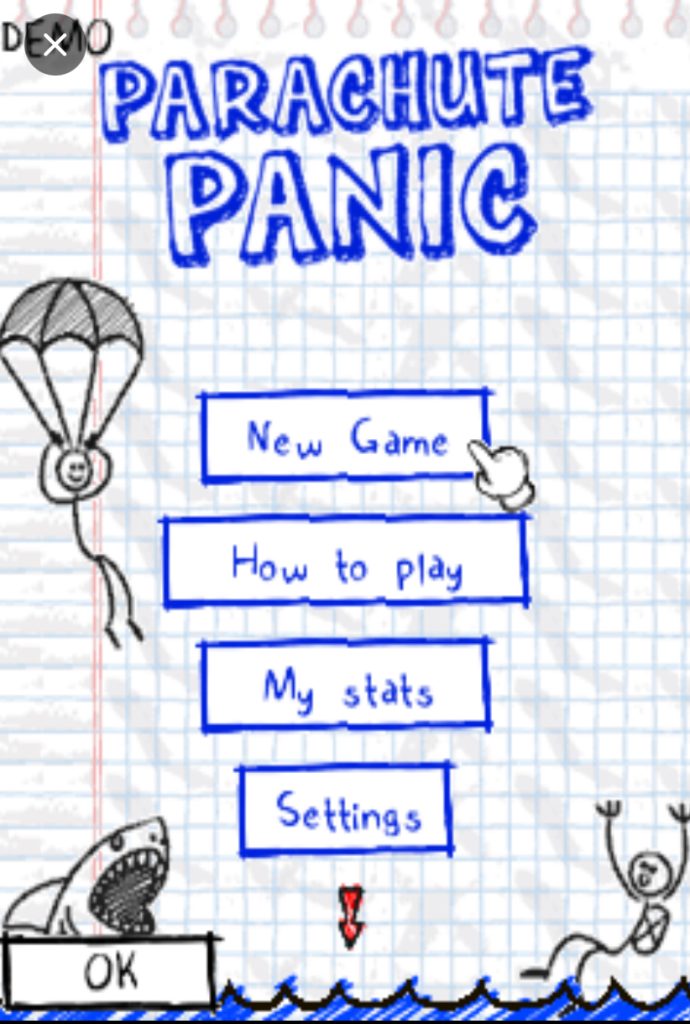
When you launch the game, you will see the title screen with the hand drawn logo and a few jumpers falling in the background. Here is exactly what to do.
Press 5 to select the main option. This is your confirm button for almost everything in the game.
You will now see the main menu. The options include New Game, How to play, My stats, and settings.
Use 2 to move up and 8 to move down through the menu items.
When Start Game is highlighted, press 5 to begin.
If you want to check the controls before playing, move down to Help using 8, then press 5 to enter. You can scroll through the help pages with 4 and 6, then press the left soft key or 5 to go back.
In Options, you can usually toggle sound effects and music. I recommend keeping sound ON. You need those audio cues. Use 4 and 6 to change settings, and 5 to confirm.
That is it. No complicated setup. Just highlight Start Game and press 5.
How to Play Parachute Panic Java game: The Complete Step by Step Controls Guide
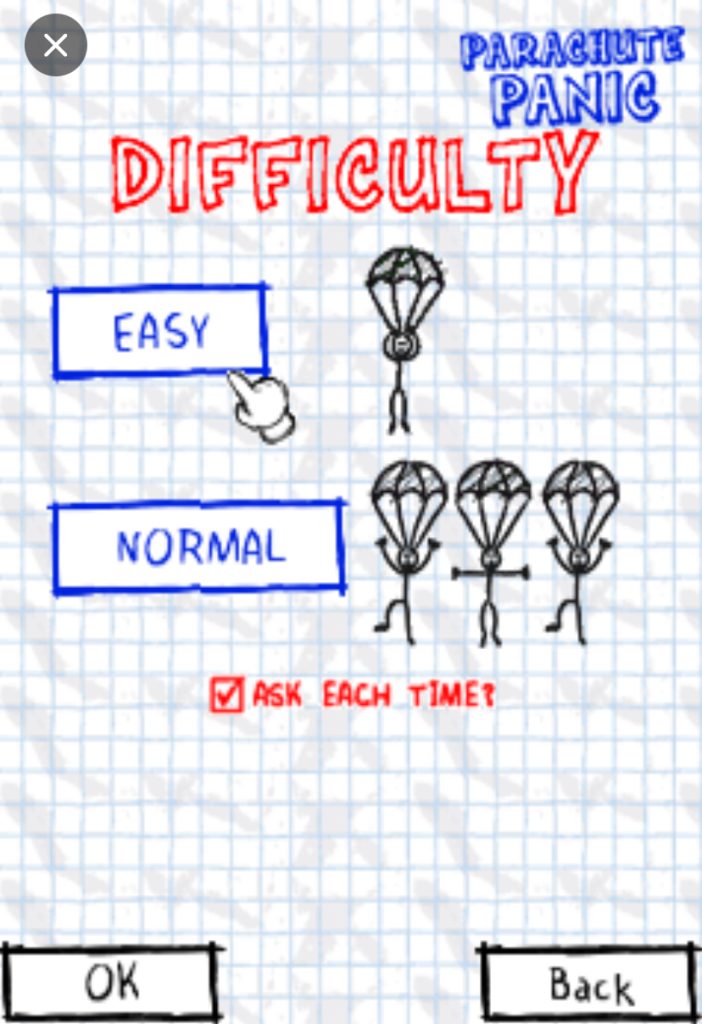
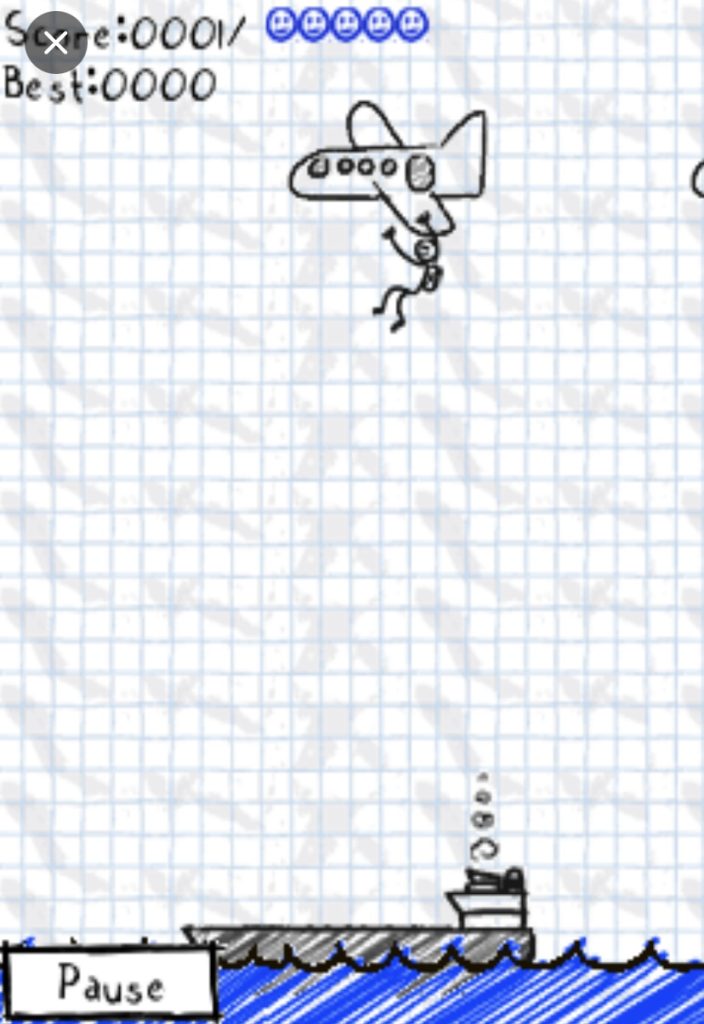
This is where we get practical. I am going to teach you like you are sitting next to me and I am handing you the phone for the first time.
The round begins. A plane flies across the top of the screen. Jumpers start falling out. Some open their parachutes automatically. Others fall with no chute at all. Your job is to spot the ones without a chute and save them.
When you see a jumper falling with no parachute, press 5 to open their chute. Do not spam it. One clean press is enough. If you press too early while they are still in the plane, nothing happens. Wait until they are clearly falling free, then hit 5.
Once the chute is open, the jumper drifts down slowly. But they rarely fall straight onto the boat. You need to steer them. Press 4 to blow wind to the left. This pushes the jumper toward the right side of the screen. Press 6 to blow wind to the right.
This pushes the jumper toward the left side of the screen. I know that feels backwards at first. Think of it this way: you are not moving the jumper directly. You are pushing the air, and the air moves them. So if the boat is on the right side of the screen and your jumper is drifting left, press 6 to create wind that pushes them back toward the boat.
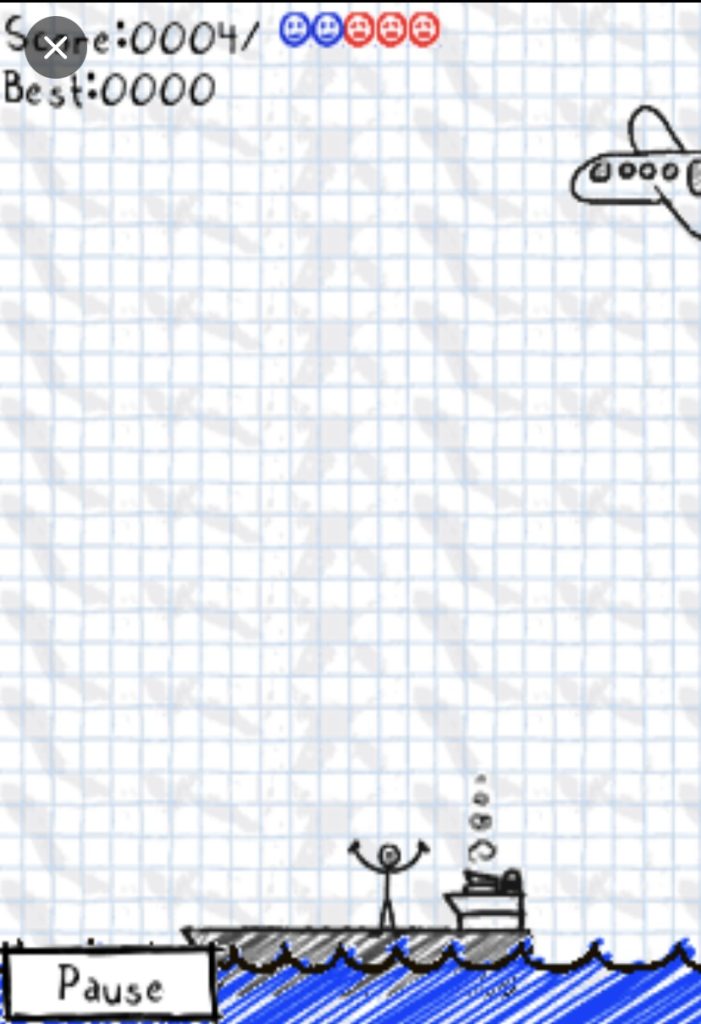
Here is a real example from my gameplay. A jumper left the plane on the far left side. The boat was on the far right. I waited until he was about halfway down, then I pressed 5 to open his chute. He started drifting even more left. That was bad. So I pressed 6 three times in quick taps. Not holding, just tapping. Each tap gave him a small push toward the right. By the time he reached the bottom of the screen, he was centered above the boat. I stopped pressing 6 and let him drop straight in. Perfect landing. Combo increased.
Now let us talk about multiple jumpers. This is where panic sets in. Two jumpers fall at the same time. One on the left has no chute. One on the right already has his chute open but is drifting away from the boat. What do you do? Priority rule: save the one without the chute first. A falling body hits the water in about three seconds. A drifting chute gives you five to six seconds to fix. So I quickly press 5 to open the left jumper’s chute. Then I immediately press 4 twice to nudge the right jumper back toward the boat. Then I check the left jumper’s path and use 6 if needed. It is a rhythm. Save first, steer second, adjust third.
When a helicopter appears, you will hear a warning sound before you see it clearly. It moves horizontally across the screen. If a jumper touches it, the chute gets ripped and they fall. When I hear that helicopter sound, I immediately look at which jumper is in its path. If my jumper is on the left side and the helicopter is coming from the right, I press 6 twice to push them further left, away from the helicopter’s flight path. Once the helicopter passes, I press 4 to straighten them back toward the boat. If a helicopter is already close and about to hit, you can actually destroy it by pressing 5 repeatedly on the threat itself. It takes about five rapid presses. But honestly, in early rounds, it is safer to just dodge.
UFOs work similarly but they appear higher up and move slower. They also take about five taps to destroy. Storm clouds are trickier because they are static. If a jumper drifts into a cloud, they get zapped. So always steer around clouds, never through them. Press 4 or 6 early to curve your jumper’s path around the cloud rather than waiting until the last second.
The boats move back and forth. Some rounds have one boat. Later rounds have two or even three boats moving at different speeds. Watch the boat pattern for two seconds before you commit to a landing. If the boat is moving left, aim slightly ahead of it so the jumper lands where the boat will be, not where it currently is. This is called leading your target. I missed so many landings because I aimed at the boat’s current position instead of its future position.
If a jumper hits the water, a shark appears and eats them. It is funny the first time. It is less funny when it is your fifth lost jumper and the game ends. You get five total losses before game over. That sounds like a lot, but in the later waves, you can lose three jumpers in under ten seconds if you freeze up.
Know Your Threats: Obstacles and How to Beat Them
Helicopters: These move fast and horizontally. Listen for the audio cue. Dodge first, destroy second. Use 4 or 6 to push jumpers out of their path.
UFOs: Slower than helicopters but just as deadly. They hover and move in small patterns. Five quick presses of 5 on the UFO will destroy it. Only do this if no jumpers need immediate chute help.
Storm Clouds: Static and deadly. Never steer through them. Always curve around. Plan your route early.
Sharks: These are the punishment, not the threat. Sharks only appear after a jumper hits the water. Prevent the fall, prevent the shark.
Boat Edges: Landing on the very edge of a boat counts as a fall. The jumper slides off. Aim for the center of the boat. If the boat is small and moving fast, use small taps of 4 or 6 to fine tune your descent rather than big pushes.
Score Like a Pro: The Scoring System
You get base points for every safe landing. But the real money is in combos and perfect landings. If you land multiple jumpers in a row without any misses, your combo multiplier goes up.
A perfect landing happens when the jumper lands exactly in the center of the boat. You can tell because the game gives you a bigger visual flash and a happier sound. The point gap between an okay landing and a perfect landing is huge at higher combos.
So do not just spam jumpers onto the boat. Take that extra half second to line them up. At combo 5 and above, one perfect landing is worth more than three sloppy ones. Risk versus reward is the name of the game here.
Beginner Mistakes to Avoid
Opening the chute the second the jumper leaves the plane. Wait until they are actually falling. If you press 5 too early, you waste a split second and you might miss the timing on another jumper who actually needs help.
Spamming buttons when things get busy. I used to mash 4 and 6 like crazy when two jumpers were falling. This makes both jumpers swing wildly and you lose control of both. Use small, deliberate taps. One tap moves them a little. Three taps move them a lot. You do not need to hold the button down.
Tunnel vision on one jumper. I cannot count how many times I focused on getting one perfect landing while three other jumpers fell to their deaths in the background. Scan the whole screen constantly. The top of the screen is where new threats appear. The bottom is where landings happen. Your eyes should move in a loop: top, middle, bottom, repeat.
Ignoring the helicopter warning sound. That sound is your best friend. It gives you about two seconds of warning. Use that time to identify which jumper is in danger and start steering them away immediately.
Landing too close to the boat edge. If you are not sure you can hit the center, it is better to let the jumper drift past and try to circle them back than to risk a slide off the edge. A late landing is better than a failed landing.
Advanced Strategies That Actually Work
The priority rule is everything. When four jumpers are in the air, ask yourself: who dies first? That is who you help first. Not who is closest to the boat. Not who is easiest to save. Who has the least time left?
Read the plane drop pattern. Planes do not release jumpers at completely random intervals. After a few rounds, you start to feel the rhythm. There is usually a short pause between waves. Use that pause to breathe and position your next jumper.
Use small taps instead of holds. Holding 4 or 6 creates a strong wind that can overshoot your target. Tapping gives you micro adjustments. Think of it like aiming a sniper rifle versus spraying an automatic weapon.
The sacrifice play. Sometimes you have three jumpers in trouble and you can only save two. Let the one who is already too far gone fall. Focus on saving the combo for the other two. A broken combo hurts your score more than one lost jumper.
Stay calm during the ten jumper waves. Yes, ten jumpers at once sounds impossible. But they do not all need chutes immediately. Some already have chutes. Some are falling on the correct side. Only react to the ones who are actually in danger. The game wants you to panic. Do not give it what it wants.
Comparison with a Game I Played: Doodle Jump Java game
I spent a lot of time on Doodle Jump back in the day, and I think it is the perfect game to compare with Parachute Panic. Both are casual arcade games built for short play sessions. Both have simple controls and a focus on high scores. But they teach you completely different skills.
In Doodle Jump, you tilt the phone or press directional keys to move your character as he bounces upward automatically. The pace is relentless. You are always moving. There is no pause to think. Parachute Panic is different. The jumpers fall whether you act or not, but you choose when to intervene. This means Parachute Panic rewards patience and timing, while Doodle Jump rewards reflexes and constant motion.
The controls in Doodle Jump feel immediate. You tilt left, he goes left. In Parachute Panic, the wind control has a slight delay and a learning curve. You are not moving the character directly. You are influencing their path. That makes Parachute Panic feel more strategic.
For replay value, I think Parachute Panic wins in short bursts. A round of Doodle Jump can last ten minutes if you are good, and your hand starts to cramp. Parachute Panic gives you a full experience in under five minutes. It is easier to say yes to one more round. Doodle Jump is great for a long bus ride. Parachute Panic is great for a waiting room.
What Parachute Panic taught me that Doodle Jump did not is the value of reading the whole screen. In Doodle Jump, you only care about what is directly above you. In Parachute Panic, threats come from every direction. You learn to scan, prioritize, and execute. That skill actually helped me in other strategy games later on.
Why Parachute Panic Still Deserves Your Time Today
Modern mobile games have amazing graphics and deep stories, but sometimes they forget the magic of a simple idea done perfectly. Parachute Panic is pick up and play in its purest form. You do not need a tutorial that lasts twenty minutes. You do not need to grind for upgrades. You just press 5, steer with 4 and 6, and try to beat your last score. There is something honest about that. The hand drawn art style still looks charming today because it was never trying to look realistic. It has personality. Current arcade games could learn a lot from this approach. Not every game needs a battle pass. Sometimes you just need a plane, some jumpers, and a moving boat.
Conclusion
Parachute Panic is simple to learn and tough to master, which is exactly what a great arcade game should be. Start by learning the menu with 2, 4, 6, 8, and 5. Open chutes with 5. Steer with 4 and 6. Listen for helicopter sounds. Aim for the center of the boat. Do not spam buttons. Scan the whole screen. Keep your combo alive. Most importantly, stay calm when the panic hits. That is when the good players separate from the great ones. Now load the game and save some jumpers.
